Choosing stone that lasts
A field guide to the materials we specify — and the handful we have learned to avoid.
By Tomás Reyes · Verdora Landscape Studio
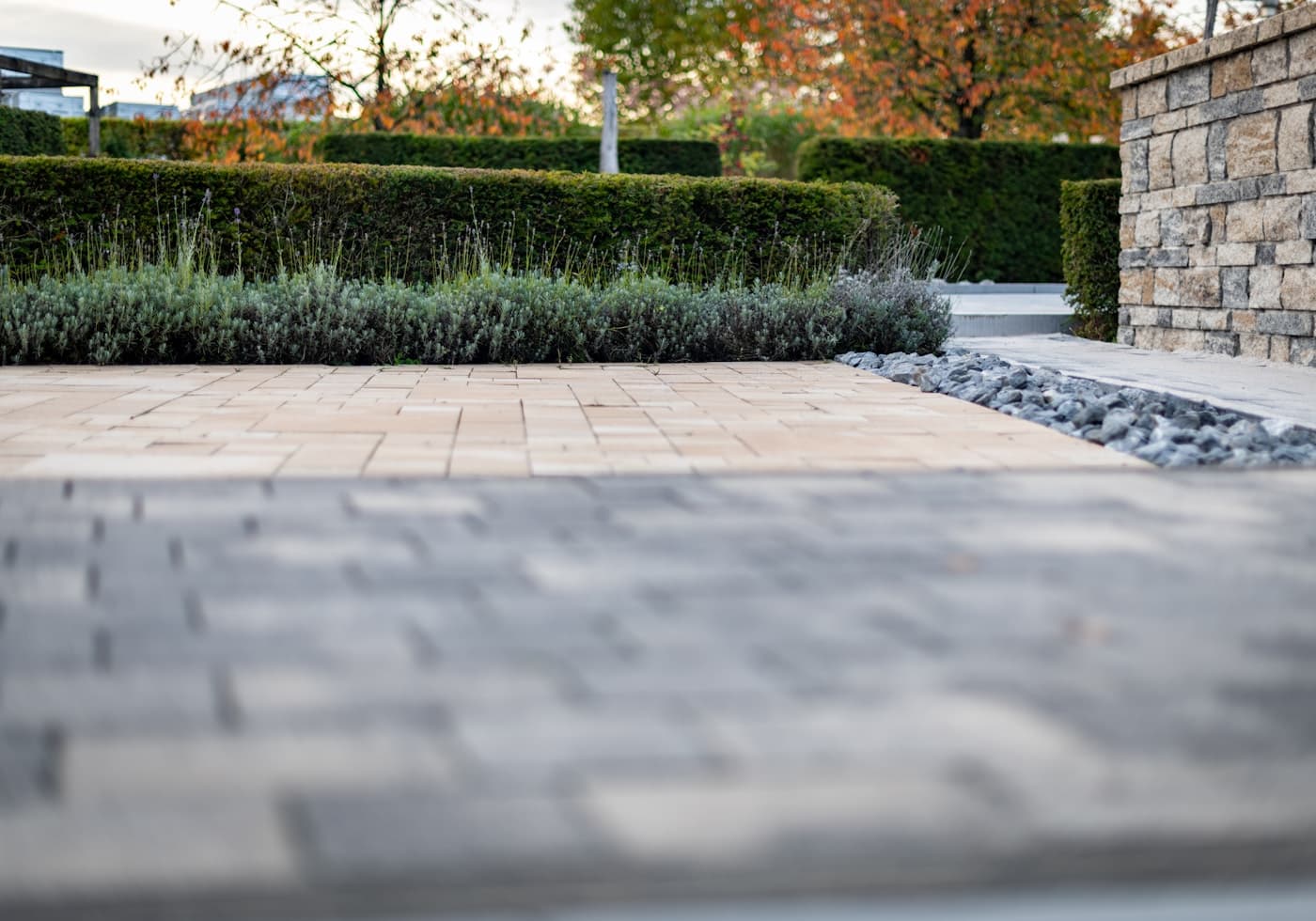
Stone is the most permanent decision in a garden and the one most often made from a photograph. Here is what we specify, what we avoid, and why.
What we reach for
Basalt. Dense, dark, almost non-porous, and excellent underfoot wet or dry. Our default for terraces that see weather and wine. It darkens beautifully and it does not stain.
Sonoma fieldstone. Local, characterful and the right material for dry-stone work and hand-set treads. It has enough variation to look like it belongs and enough consistency to be laid to a tolerance.
Sandstone, selectively. Warm, comfortable in bare feet, and considerably softer. Excellent for sheltered courtyards, less good under a redwood where organic staining is constant. Check the water absorption figure before specifying — under 3% is what you want.
Dense porcelain. Not stone, but honest about it. Dimensionally perfect, frost-proof, and the right answer for a raised terrace where weight and tolerance matter. We use it happily and we do not pretend it is quarried.
What we avoid
Travertine outdoors. Beautiful for about four years. The pores fill with grit, the surface spalls in freeze-thaw, and repair is impossible without replacing whole slabs.
Marble underfoot. It etches with anything acidic — citrus, wine, bird droppings — and it is slippery when wet. It belongs indoors.
Thin riven paving under 22mm. It cracks over any settlement, and gardens settle. If the budget forces a thin unit, use porcelain on a proper base rather than thin natural stone.
Anything with an unnamed quarry. If a supplier cannot tell you where it came from, they cannot tell you how it behaves in frost either.
The two questions that matter most
Not colour. Colour is the easiest thing to get right and the least consequential.
Ask instead: what is its water absorption, and what is the slip resistance when wet? Those two figures predict almost everything about how a surface will age and whether it will be safe on a step in January.
And then the base
The finest stone in the world laid on an inadequate base will fail within three winters. We routinely spend more on excavation, sub-base and drainage than on the material itself — and the 25-year warranty we put on our hardscape is really a warranty on what is underneath it.